
Skip links

THE peri/MENOPAUSE PATHWAY (mid-life support)

Important Note-

The Lose For Life Peri/Menopause Pathway offers lifestyle and nutritional guidance to support regulation, energy, and wellbeing during hormonal change.
It is not a substitute for medical advice, diagnosis, or treatment.

If you are under medical care, managing a health condition, or experiencing severe or concerning symptoms, please consult your healthcare professional.

Before You Begin

As you move into this part of the book, it’s important to understand something clearly.

This is not a separate plan.

It is an extension of the work you’ve already begun.

Everything you’ve explored so far — your patterns, your behaviours, your relationship with food, and the Weight Response System™ — is what allows this approach to work.

The Midlife Nutrition Pathway supports the biological influences within the Weight Response System™.

The Regulate & Liberate™ practices support the behavioural and emotional influences.

Together, they create the conditions for lasting weight regulation.


Midlife Pathway Introduction

Your Body Isn’t Broken. It’s Adapting.

If weight loss has started to feel harder during perimenopause or menopause, it isn’t because you’ve lost willpower.

Your body is changing.

During this stage of life, levels of oestrogen and progesterone fluctuate and gradually decline.

These hormones influence far more than your cycle.

They influence energy regulation.

Stress responses.

Sleep quality.

Body composition.

Appetite.

Mood.

And how your body responds to food.

These biological influences are all part of the Weight Response System™.

Which means that as hormones change, the system itself can feel different.

The strategies that once felt easy may now feel inconsistent.

The approaches that once worked may now feel exhausting.

This pathway exists because midlife bodies often require different support.

Not more control.


Why Nutrition Needs To Shift

As hormones change, your body often becomes more sensitive to:

• Blood sugar fluctuations

• Long gaps between meals

• Under-eating

• Over-restriction

• Chronic stress

• Poor sleep

This can show up as:

• Increased abdominal weight gain

• Stronger cravings

• Energy crashes

• Sleep disruption

• Hot flushes and night sweats

• Mood changes

• Feeling wired but tired

• A sense that your body is responding differently than it once did

This does not mean you need to eat less.

It means your body benefits from more consistent nourishment, steadier energy, and reduced biological stress.

Because when biological stress reduces, the Weight Response System™ becomes easier to regulate.


Why Willpower Can Feel Harder

Hormonal shifts can increase sensitivity to stress.

And when the nervous system is under strain, appetite, cravings, and eating behaviours often become more reactive.

This can contribute to:

• Emotional eating

• Stronger urges around food

• Less tolerance for hunger

• Reduced energy for self-control

• Increased food noise

This is not a lack of strength.

It is your body responding to a changing internal environment.

The answer is not more rules.

The answer is greater regulation.

How This Pathway Works-

This Is Not Just A Food Plan

This is not simply a food plan.

It is one part of the Lose For Life Framework™.

Weight regulation is influenced by many different factors.

Biology.

Behaviour.

Stress.

Emotions.

Food noise.

Habits.

Identity.

The nervous system.

And the hormonal changes that occur during midlife.

Together, these form what we call the Weight Response System™.

This Midlife Nutrition Pathway has been designed to support the biological influences within that system.

Helping create the conditions where your body can regulate more effectively and your behaviour can become easier to change.

Not through restriction.

But through regulation.

When the body feels supported:

• Cravings often reduce

• Hunger becomes clearer

• Emotional eating begins to soften

• Energy becomes more stable

• Recovery improves

• Weight regulation becomes more accessible

This pathway supports that process.


The Lose For Life Midlife Nutrition Framework

This approach is built around four key pillars.

Each one supports a different aspect of the Weight Response System™.

Together, they help create the conditions where lasting change feels more sustainable and less exhausting.

Pillar 1 — Blood Sugar Stability

Supporting energy, appetite regulation, cravings, and metabolic health.

Pillar 2 — Hormone Support

Supporting the biological systems that influence hunger, satiety, mood, energy, and weight regulation during perimenopause and menopause.

Pillar 3 — Nervous System Regulation

Helping reduce stress-driven eating patterns while supporting emotional and physiological regulation.

Pillar 4 — Behaviour & Identity Shift

Supporting awareness, intentional choices, and sustainable habit change over time.

These are not separate strategies.

They work together.

Supporting your body, your mind, and your patterns simultaneously.


Hydration & Midlife Support

Hydration becomes increasingly important during perimenopause and menopause.

Changes in temperature regulation, sleep quality, hormone fluctuations, and fluid balance mean your body benefits from consistent hydration.

Low hydration can contribute to:

• Fatigue

• Headaches

• Dry skin

• Increased hot flush discomfort

• Constipation

• Reduced concentration

• Stronger cravings

Gentle Guidance

• Sip water regularly throughout the day rather than relying on large amounts at once

• Include fluids alongside meals

• Herbal teas can be especially soothing

• Notice how hydration influences energy, digestion, mood, and temperature regulation

• Alcohol and caffeine increase fluid requirements rather than replacing hydration

Hydration is one of the simplest ways to support the biological side of the Weight Response System™.

It’s not a rule.

It’s a form of care.

This plan works because it stabilises biology first — so behaviour change doesn’t require constant willpower.

HOW TO FOLLOW THE PLAN-

THERE ARE 3 SIMPLE STEPS TO THIS PLAN.

* STEP 1- YOU EAT 3 REGULATE MEALS PER DAY

* STEP 2- SNACKS (IF NEEDED)

* STEP 3- WEEKLY LIBERATION FOODS (FREEDOM WITH STRUCTURE)
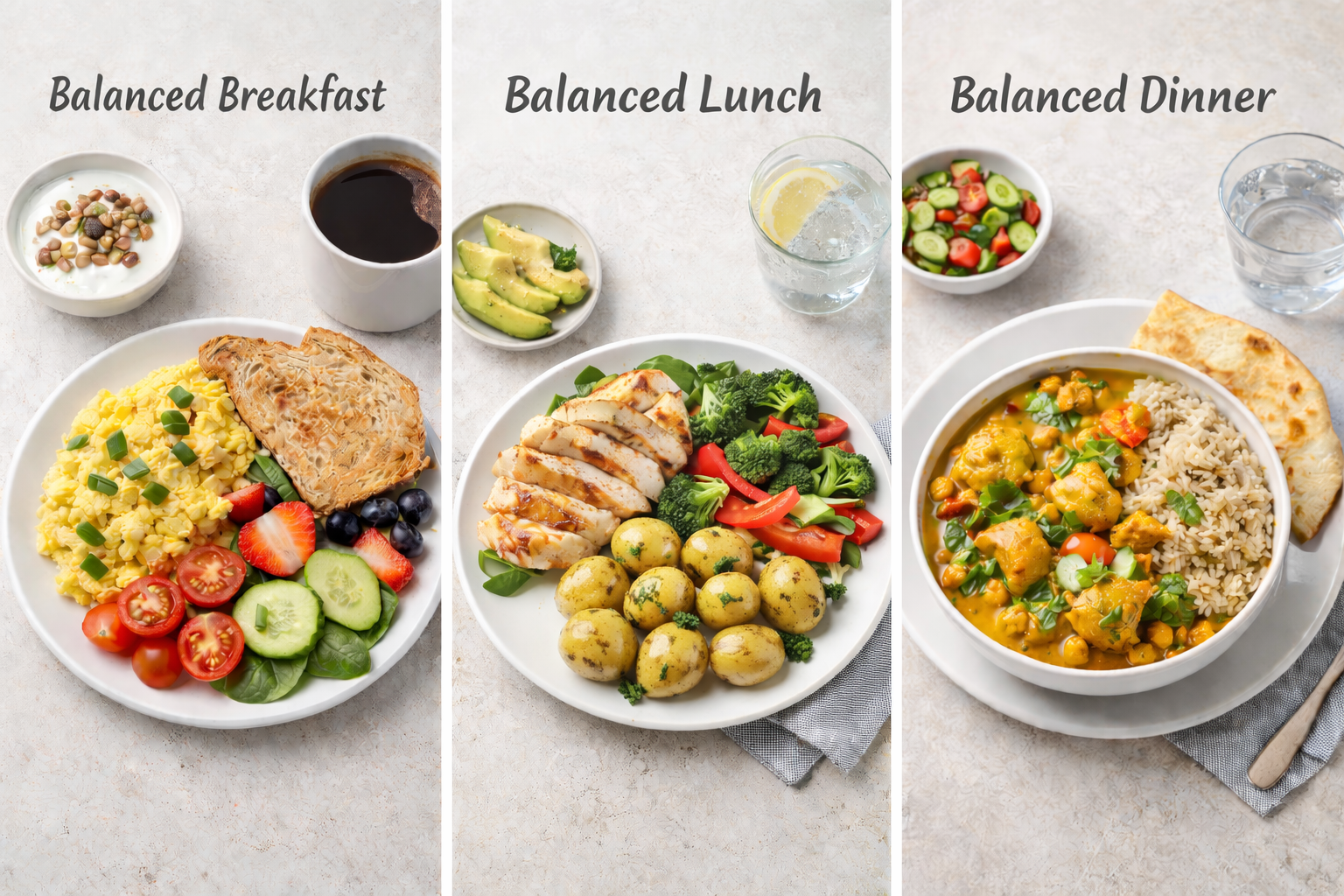
STEP 1- DAILY REGULATE MEALS

You eat three Regulate meals per day.

This provides predictable nourishment, stabilises blood sugar, and reduces nervous system stress.

What This Looks Like in Midlife- the intention behind each block changes to:

• More protein for protection In midlife, protein helps protect muscle, energy, and metabolism.
Practical tips:
– Make protein the first thing you plan on your plate
– If you’ve been skimping on protein, gently increase toward the upper end of your portion
– Notice if higher protein improves fullness and reduces snacking

• More consistency with fats
Healthy fats support mood, brain function, and hormone signalling.
Practical tips:
– Avoid skipping fats in an attempt to “be good”
– Include a small nourish fat most days
– Notice if consistent fats improve satisfaction and reduce cravings

• More awareness around carb timing. Carbs still belong in your meals, but timing and pairing can matter more in midlife.
Practical tips:
– Pair carbs with protein and fats to reduce energy crashes
– If sleep is disrupted, notice whether large evening carb portions help or hinder your rest
– If you experience afternoon slumps, ensure your lunch includes enough energy rather than cutting carbs

• More support for digestion and recovery.
Digestion and recovery can slow slightly in perimenopause and menopause.
Practical tips:
– Eat a little more slowly when you can
– Prioritise warm, simple meals if digestion feels sensitive
– Support recovery with regular meals and adequate fluids
– Notice which foods feel grounding rather than inflammatory for you
Your plate is is to now be adapted for the body you have now.

Each regulate meal (plate) is built from four simple blocks.

This means you are not guessing what to eat — you are assembling a regulated plate.

* Please note with portion guides- the plate guide shows balance. The hand guide shows practical portion size.

Both tools point to the same outcome: balanced meals that support blood sugar, hormones, and appetite regulation — without weighing or tracking.

WHAT A REGULATE PLATE LOOKS LIKE-

Breakfast example:
Protein + energy portion + vegetables/fruit + optional nourish fat

Lunch example:
Protein + energy portion + half-plate vegetables + nourish fat

Dinner example:
Protein + energy portion + half-plate vegetables + nourish fat

You are building regulated meals — not perfect meals.

Gentle reassurance and reframe-
If your body responds differently than it did in your 30s or 40s, that’s not failure. It’s feedback.
This pathway is designed to help you listen to that feedback without removing structure.
These are not rules to follow perfectly.
They are supports to experiment with.
Your body will tell you what helps it feel steadier.
This pathway teaches you how to listen without removing structure.

YOUR 4 BLOCKS-

Protein becomes more protective in midlife.

As oestrogen declines, the body becomes more prone to muscle loss and metabolic slowing. Adequate protein helps to support:

• Muscle maintenance
• Metabolic rate
• Satiety
• Blood sugar stability
• Recovery and energy

Menopause guidance:
Aim for the upper end of your protein portion at each regulate meal.

This supports body composition, energy, and appetite regulation without increasing restriction.

Portion guidance: One palm-sized portion per main meal. Or 1/4 plate from options below.

Carbohydrate tolerance can shift during menopause.

Some women notice increased sensitivity to large carbohydrate portions, especially when eaten without protein or fats. Others notice energy crashes if carbs are reduced too much.

Menopause guidance:
• Keep carbohydrates included at each regulate meal
• Favour slower-digesting energy sources (e.g. potatoes, oats, wholegrains, legumes)
• Pair carbs with protein and fats to reduce blood sugar swings
• Notice how different portions affect energy, sleep, and hot flushes

Carbs are not removed.
They are structured to support steadier energy and lower stress on the body.

Portion guidance: 1 cupped hand per main meal. ¼ plate carbohydrates from options below.

Healthy fats become more important for nervous system and hormone support.

In midlife, fats support:

• Hormone signalling
• Brain function
• Joint health
• Nervous system regulation
• Satiety and satisfaction

Menopause guidance:
Ensure you include your daily nourish fats consistently, rather than skipping fats in an attempt to “be good.”

This supports mood, energy, and internal stability.

Portion guidance: One palm-sized portion per main meal. Or 1/4 plate from options below.

Fibre plays an important role in supporting health during perimenopause and menopause.

Vegetables support:

• Gut health

• Digestive comfort

• Blood sugar stability

• Inflammation regulation

• Oestrogen metabolism

• Appetite regulation

Midlife Guidance

• Aim for variety and colour across the day

• Include fibre-rich vegetables regularly

• Use vegetables to add nourishment, volume, and satisfaction to meals

• Continue eating until comfortably satisfied rather than beyond comfort

The goal is not to eat as much as possible.

The goal is to support your body while strengthening awareness of hunger, fullness, and satisfaction.


An Important Note About Comfortable Fullness

Many diet plans focus on rules.

How much you can eat.

What you can eat.

Or what you’re allowed to have.

For women who have spent years dieting, restricting, overeating, or repeatedly starting over, this can sometimes disconnect us from the signals our body is trying to give us.

This pathway takes a different approach.

The goal is not to override your body.

The goal is to rebuild trust with it.


Why Hunger And Fullness Cues Can Feel Unreliable

If you’ve spent years dieting, restricting, overeating, or moving between periods of control and loss of control around food, your body has learned to adapt.

During midlife, hormonal changes can make this feel even more noticeable.

Over time, this can contribute to:

• Blunted hunger signals

• Stronger cravings

• Feeling suddenly very hungry

• Difficulty recognising fullness

• Automatic eating behaviours

• A sense of urgency around food

This is not a lack of willpower.

It is your body responding to periods of stress, hormonal change, inconsistency, restriction, and unpredictability around food.

When food has felt scarce, the body learns to protect itself.

When food has become emotionally loaded, the body learns to seek comfort.

And when eating has become automatic, awareness can gradually become disconnected from the process.

This is one of the reasons awareness plays such an important role within the Lose For Life Framework™.


Rebuilding Trust With Your Body

Reconnecting with your body is a skill.

It returns through consistency, safety, awareness, and practice.

Not through control.

1. Eat Regular, Structured Meals

Predictable nourishment helps teach your body that food is available and safe.

2. Slow Down Slightly When Eating

You do not need to eat perfectly mindfully.

Simply creating a little more space during meals can help you notice how your body feels.

3. Check In Mid-Meal

Pause briefly and ask:

“Am I still physically hungry?”

“Am I beginning to feel satisfied?”

There is no right or wrong answer.

The goal is awareness.

4. Practise Stopping At Comfortable Fullness

Not stuffed.

Not overly full.

Simply comfortably satisfied.

This may feel unfamiliar at first.

That’s okay.

You are rebuilding a skill, not passing a test.

5. Remove Judgement

There will be meals where you eat beyond comfort.

That doesn’t undo your progress.

Awareness is still progress.

You simply return to your next structured meal and continue.


What Comfortable Fullness Means

Comfortable fullness is not a rule.

It’s a guide.

A gentle invitation to begin listening to your body again.

The goal is not perfection.

The goal is awareness.

Over time, this helps strengthen trust.

Supports appetite regulation.

Reduces automatic eating.

And helps rebuild a more connected relationship with food.

Because lasting weight regulation is not created through restriction.

It’s created through awareness, consistency, and trust.

Eat until comfortably satisfied. Not because a rule tells you to stop, but because your body is beginning to tell you it has had enough.

STEP 2- SNACKS (IF NEEDED)

Snacks are optional.
They are used more intentionally in perimenopause and menopause to support:
• Blood sugar stability
• Energy levels
• Mood regulation
• Reduced irritability
• Better sleep quality

If you are not hungry between meals, you do not need to snack.
If you are hungry, a regulating snack can prevent energy crashes and reactive eating later.

When Snacks Can Be Especially Supportive in Midlife-
You may benefit from a snack if you notice:
• Mid-morning or mid-afternoon energy dips
• Feeling shaky, irritable, or “wired but tired”
• Strong urges to reach for sugar or caffeine
• Difficulty sleeping when dinner is very early
• Hot flushes or night sweats worsened by long gaps without food

Snacks are a tool — not a requirement.

How to Choose a Regulating Snack (Menopause Focus)-
A regulating snack includes:
• 1 Foundation (Protein)
• 1 Gentle Energy or Fibre
• Optional Daily Nourish (if needed for satiety)
This combination supports steadier energy and reduces blood sugar swings, which can be more noticeable in midlife.

Simple Snack Combinations (Examples)

Protein-forward:
• Greek yoghurt
• Cottage cheese
• Eggs
• Protein-based snacks

Protein + fruit / fibre:
• Apple with nut butter
• Berries with yoghurt
• Oatcakes with cheese
• Hummus with vegetable sticks

Evening support (if sleep is affected):
• Yoghurt with a small portion of fruit
• Cottage cheese with berries
• A warm milk-based drink with a protein snack

These options support steadier blood sugar through the evening, which can support sleep quality for some women.

Portion Guidance (No Weighing)
Use simple hand guides:
• Protein: ½–1 palm
• Fruit / fibre: 1 cupped hand
• Fats (if included): 1 thumb


Snacks are not full meals. They bridge you to your next regulate meal.

Emotional Safety Check-In-
Before snacking, pause and ask: Am I physically hungry — or emotionally activated?
If emotional:
Use your regulation tools first.
Then eat if you still need to.
Both needs can be valid. This builds awareness without removing choice.

Gentle Boundaries
Snacks support regulation. They are not used to graze continuously.
If you find yourself needing frequent snacks, this is feedback — not failure.
It may mean your regulate meals need more protein, energy, or nourishment.

STEP 3- LIBERATION FOODS (FREEDOM WITH STRUCTURE)

Liberation foods are the foods you enjoy that sit outside your everyday foundation structure.

They are included to support social life, enjoyment, and long-term consistency — without triggering binge–restrict cycles.

Nothing is banned.
Nothing requires “starting again.”
You return to your structure at the next meal.
Enjoyment and social connection matter at every stage of life.

However, in perimenopause and menopause, some liberation choices can have a stronger impact on:
• Sleep quality
• Hot flushes and night sweats
• Mood stability
• Next-day energy

This pathway helps you include liberation with awareness, not removal.

Choose Your Liberation Style-
As with the core plan, choose the style that supports you best:

Option A — Small Daily Liberation.
A small portion of a liberation food most days.
Examples:
• A small chocolate bar
• A biscuit with a hot drink
• A small dessert portion
• A small glass of wine (if tolerated)

This suits those who prefer gentle daily flexibility.

Option B — One Planned Weekly Liberation.
One larger, planned liberation choice in the week.
Examples:
• One takeaway or restaurant meal
• One dessert out
• Up to 2 standard alcoholic drinks on one occasion
• A social meal with foods outside your foundation structure
This suits those who prefer structure most days with one intentional social moment.

Menopause-Specific Awareness-
Some women notice that alcohol, high-sugar foods, and late heavy meals can:
• Disrupt sleep
• Increase hot flushes or night sweats
• Worsen next-day fatigue or low mood

Guidance:
• Notice how different liberation choices affect your sleep and symptoms
• You may choose earlier timing, smaller portions, or different options
• Liberation is adjusted for tolerance — not removed

This is not about being “good.” It’s about listening to feedback from your body.

ALCOHOL — Informed Choice, Not a Ban
Alcohol is included in liberation choices, but it interacts differently with the body than food, so it is important to understand how it interacts with your body and your goals.
Alcohol temporarily slows fat burning because your body prioritises processing alcohol first. It can also increase appetite, lower inhibition around food, and impact sleep and mood.
Alcohol may increase hot flushes, night sweats, and sleep disruption. Some women benefit from smaller amounts or earlier timing.
This doesn’t make alcohol “bad.” It just makes it something to choose intentionally.
If alcohol has been a coping tool for you in the past, you’re not doing anything wrong.
This plan simply invites you to notice that pattern with compassion.
Guidance:
• If you drink regularly, progress may be slower
• If you drink occasionally and intentionally, progress continues
• Notice how alcohol affects your mood, sleep, and food choices
• Choose amounts that allow you to return to your next meal feeling steady
As with food, alcohol is best enjoyed for social connection — not used for emotional regulation or distraction.-
Clear Boundaries-
Liberation is planned and portioned — not open-ended.
Guidelines:
• Liberation complements your regulated meals — it doesn’t replace the week of structure
• One planned event is different from a full day of grazing
• Two drinks is different from drinking through emotional activation
• Choose portions that allow you to return to your next meal feeling steady, not depleted
If liberation foods tend to trigger loss of control, use your regulation tools first, then choose intentionally.

Emotional Safety Reminder-
Liberation is not about “being good” or “being bad.”

A Final Word for This Stage of Life-

Your body is not failing you.
It is changing.

Perimenopause and menopause bring real biological shifts.
Those shifts affect energy, appetite, mood, sleep, and how your body responds to stress.

This pathway is not about fighting those changes.
It is about working with them.

You are not required to eat less, restrict harder, or push yourself beyond capacity.
You are invited to provide steadier nourishment, gentler structure, and more consistent care.

There will be days your body feels cooperative.
There will be days it feels more sensitive or unpredictable.
Both are part of this stage — not signs you are doing anything wrong.

If you miss a meal, eat emotionally, or choose more liberation than planned, nothing is broken.
You pause.
You regulate.
You return to structure at your next meal.

Progress in midlife is built through consistency, not intensity.
Safety creates steadiness.
Steadiness creates change.

You are not behind.
You are adapting to a new phase of life — with support.