
Skip links

THE GLP-1 PATHWAY

Important Note-

The Lose For Life GLP-1 Pathway provides lifestyle and nutritional guidance to support regulation and nourishment alongside appetite-altering medication.
It is not a substitute for medical advice.

If you are using GLP-1 medication or any prescription medication, please follow the guidance of your healthcare provider regarding dosing, side effects, and medical considerations. This pathway is designed to support your wellbeing alongside medical care, not replace it.

If you experience persistent nausea, vomiting, dizziness, or other concerning symptoms, seek medical advice.

GLP-1 PATHWAY — INTRODUCTION-

Medication Can Change Appetite. Your Body Still Needs Care.

If you’re using a GLP-1 medication, your experience of hunger, fullness, and food interest may feel very different to before.

For some women, this brings welcome relief from constant food noise.
For others, it can feel confusing, uncomfortable, or emotionally disorienting.

This pathway exists to help you use medication in a way that supports your body, not bypasses it.

GLP-1 medications influence hunger signals and how quickly food moves through the digestive system. This can be helpful for weight loss, but it can also increase sensitivity to:

• Nausea
• Early fullness
• Reduced appetite
• Food aversions
• Dehydration
• Skipping meals unintentionally
• Low energy if nourishment drops too low

This pathway is not about eating as little as possible.
It is about maintaining regulation while appetite is altered.

Why Structure Still Matters on GLP-1

When appetite is quieter, it becomes easier to under-eat without realising.
Over time, this can affect:

• Energy
• Mood
• Muscle mass
• Metabolic support
• Nervous system stability
• How sustainable weight loss feels

Weight loss driven only by appetite suppression can feel fast at first, but it’s harder to maintain if the body becomes stressed, under-fuelled, or disconnected from internal cues.

The Lose For Life structure stays in place so your body continues to feel safe and supported — even when hunger is less obvious.

What This Pathway Does Differently

The GLP-1 Pathway uses the same core framework:
regulate meals, snacks if needed, and liberation with structure.

The adjustments in this pathway focus on:

• Prioritising protein when appetite is lower
• Using smaller, more manageable meal volumes if needed
• Supporting hydration and digestion
• Reducing nausea triggers
• Preventing long gaps without nourishment
• Protecting muscle and metabolic health
• Supporting nervous system regulation while food interest changes

This keeps weight loss steadier and more sustainable over time.

A Different Relationship With Appetite

On GLP-1, hunger may feel quieter or less reliable.
That doesn’t mean your body needs less care.

This pathway supports you to eat with awareness rather than avoidance, even when appetite isn’t loud. It helps you stay nourished so regulation remains intact.

Medication can quiet the noise.
Structure helps your body feel safe.

Gentle Reassurance

Using medication is not “cheating.”
It is a support tool.

This pathway ensures that tool is used in a way that protects your wellbeing, regulation, and long-term success — not just short-term weight change.

You still deserve nourishment.
You still deserve steadiness.
You still deserve care.

HOW THIS PLAN WORKS-

This Is Not About Eating as Little as Possible

GLP-1 medication can significantly reduce appetite and food noise.
While this can support weight loss, undereating for long periods can place stress on the body and nervous system.

This pathway is designed to keep your body regulated while appetite is altered.

Weight loss becomes more sustainable when your biology feels supported — not under-fuelled.

Regulation Still Comes First

Even with medication, sustainable change is not created through appetite suppression alone.
It is created when:

• Blood sugar remains stable
• Muscles receive enough protein
• Hydration supports digestion and energy
• The nervous system does not feel under threat
• Nourishment remains predictable

This plan keeps structure in place so your body continues to feel safe — even when hunger cues are quieter.

How Medication and Structure Work Together

Medication can reduce the “noise” around food.
Structure helps your body stay nourished and regulated.

Together, they:
• Reduce reactive eating
• Support steadier energy
• Protect muscle and metabolic health
• Lower nervous system stress
• Improve long-term sustainability

This is not about pushing weight loss faster.
It is about making weight loss easier to maintain.

The Same Structure, With Adjustments

You still follow the same Lose For Life framework:

• 3 regulate meals per day
• Snacks if needed
• Liberation with structure

What changes is how gently and flexibly you apply that structure to match your appetite and tolerance.

You are not here to override your body.
You are here to support it while medication changes how hunger feels.

Gentle Reassurance

If some days you eat very little and other days your appetite returns, that’s not failure.
It’s part of how medication can affect appetite.

This pathway helps you respond to those shifts with steadiness — not control.

HYDRATION & COMFORT SUPPORT

Hydration is one of the simplest ways to make GLP-1 feel more comfortable.

Hydration is especially important when using GLP-1 medication, as both appetite and thirst cues can be reduced.

Low hydration can contribute to:
• Nausea
• Headaches
• Fatigue
• Dizziness
• Constipation
• Feeling unwell between meals

This plan does not require you to track water.
It encourages regular, gentle hydration to support comfort and regulation.

Gentle guidance:
• Sip fluids regularly across the day, even if you don’t feel thirsty
• Small, frequent sips are often better tolerated
• Include fluids with meals and snacks
• Herbal teas, water, sparkling water, and light broths can all count
• Pair alcohol and caffeine with extra hydration
• Notice if hydration reduces nausea or low-energy feelings

Hydration supports how your body tolerates medication.
It helps meals feel easier, energy steadier, and regulation more comfortable.

This plan works because it stabilises biology first — so behaviour change doesn’t require constant willpower.

HOW TO FOLLOW THE PLAN-

THERE ARE 3 SIMPLE STEPS TO THIS PLAN.

* STEP 1- YOU EAT 3 REGULATE MEALS PER DAY

* STEP 2- SNACKS (IF NEEDED)

* STEP 3- WEEKLY LIBERATION FOODS (FREEDOM WITH STRUCTURE)

What changes with GLP-1 medication is how gently and flexibly you apply that structure to match your appetite and tolerance.
You are not here to override your body.
You are here to support it while medication changes how hunger feels.

Gentle Reassurance-
If some days you eat very little and other days your appetite returns, that’s not failure.
It’s part of how medication can affect appetite.
This pathway helps you respond to those shifts with steadiness — not control.
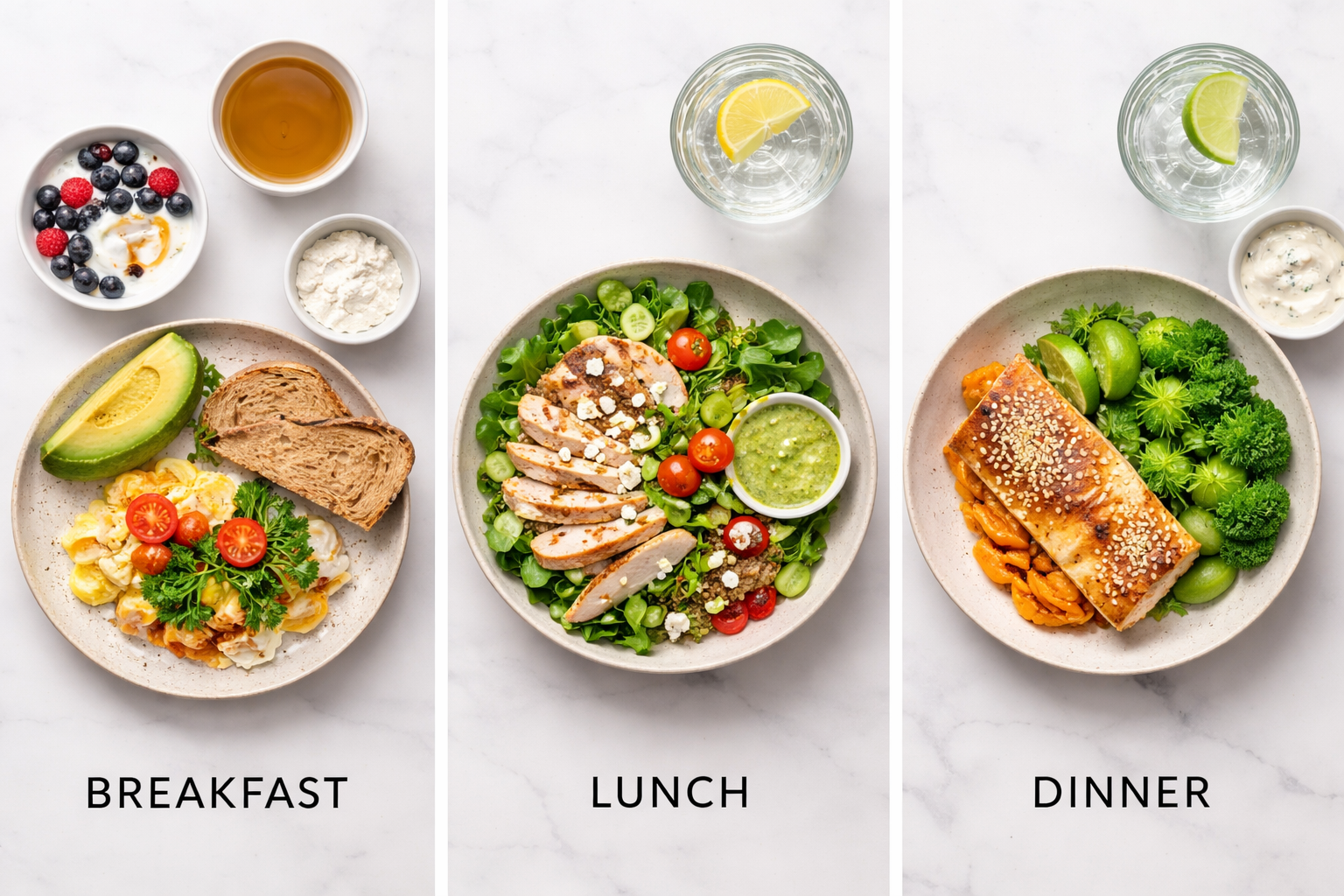
STEP 1- DAILY REGULATE MEALS (ADJUSTED FOR APPETITE & TOLERANCE)

You still aim for three regulate meals per day.
On GLP-1, appetite and fullness cues may feel quieter, changeable, or unpredictable — so meals may be smaller and more gently paced. Structure still matters.

A note on using GLP-1 as a tool-
Whether you are using GLP-1 medication as a longer-term support, or as a stepping stone toward independent weight management, it’s important to understand what the medication does — and what it doesn’t.

GLP-1 alters appetite and fullness while the medication is in your body. It does not regulate hormones, nervous system function, or metabolism on its own.
Those systems still require adequate nourishment, consistency, and care.

It can feel tempting to eat as little as possible to “maximise” the results of a costly medication. In the short term, this may speed weight loss.
In the long term, chronic under-eating increases biological stress, reduces energy, impacts muscle and metabolic support, and makes weight regain more likely when medication is reduced or stopped.

This pathway exists to help you use medication in a way that supports sustainable change, not just short-term results.

You are not here to deprive your body.
You are here to regulate it — even while appetite feels different.

The Regulate Plate (Same Structure, Gentler Application)
You still build your meals from the same four blocks:
Protein + energy + vegetables + nourish fats.
What changes on GLP-1 is volume, pacing, and priority.

You are assembling a regulated plate — not forcing yourself to eat a full plate if your body isn’t ready.

Block 1 — Foundation (Protein Anchor)
Protein is the priority on GLP-1.
When appetite is reduced, protein is the easiest block to under-eat — and the one that most protects muscle, metabolism, and energy.

GLP-1 guidance:
• Start meals with protein
• Prioritise protein even when appetite is low
• Use softer textures if nausea is present (e.g. yoghurt, eggs, fish, tofu)
• If full quickly, finish protein first
This supports muscle preservation and steadier, more sustainable weight loss.

Block 2 — Energy Portion (Carbohydrates)
Carbohydrates remain part of regulate meals, but tolerance may vary on GLP-1.
GLP-1 guidance:
• Include a small, steady energy portion as tolerated
• Choose gentler options if nausea is present (e.g. potatoes, oats, rice, fruit)
• Pair carbs with protein to support energy and digestion
• If appetite is very low, prioritise protein first and add carbs as comfortable
Carbs are not removed.
Block 3 — Daily Nourish (Healthy Fats)
Fats support hormones, satiety, and nervous system regulation, but heavier fats can sometimes worsen nausea.
GLP-1 guidance:
• Include nourish fats in smaller, intentional amounts
• Choose lighter options if nausea is present (e.g. drizzle of oil, small amounts of avocado)
• Avoid very heavy or greasy additions if they increase discomfort
Fats remain supportive — they are used gently to suit tolerance.

Block 4 — Unlimited Vegetables (Fibre & Volume)
Vegetables support micronutrients and digestion, but large volumes can feel uncomfortable on GLP-1.
GLP-1 guidance:
• Include vegetables, adjusting volume for comfort
• Choose cooked vegetables if raw veg worsens nausea or bloating
• Eat to comfortable fullness — not to a visual plate target
“Unlimited” remains guided by tolerance and cues, not by finishing the plate.

What This Looks Like on GLP-1-
Your regulate meals still follow the same structure.
What changes is how gently you apply it:
• Smaller portions if needed
• Slower pacing
• Greater emphasis on protein
• More flexibility around volume based on nausea and fullness
This keeps nourishment in place without forcing food when appetite is low.

Gentle Reassurance-
If some days you can’t manage full meals, that’s feedback — not failure.
Aim for regular nourishment in smaller, gentler amounts.
If appetite returns on some days, you return to your usual regulate structure.
Consistency over time matters more than any single meal.

BLOCK 1- FOUNDATION FOODS (PROTEIN ANCHOR)

Protein is the priority block on GLP-1.

Portion guide:
• Aim for 1 palm-sized portion per regulate meal
• If appetite is low or nausea is present, begin with ½ palm and build up as tolerated
• If you feel full quickly, eat your protein first

Why this matters:
Protein supports muscle, metabolism, and steadier energy — all of which protect long-term results when appetite is reduced.

BLOCK 2- ENERGY FOODS (CARBOHYDRATES)

Carbohydrates remain part of regulate meals, but portions may feel larger than appetite allows at first.

Portion guide:
• Aim for 1 cupped hand per regulate meal
• If nausea or early fullness is present, begin with ½ cupped hand
• Pair carbs with protein to support digestion and steadier energy

Why this matters:
Carbohydrates support energy and hormone function. On GLP-1 they are adjusted for comfort — not removed.

BLOCK 3- DAILY NOURISH (HEALTHY FATS)

Fats support nervous system regulation and satiety, but heavy fats can worsen nausea for some people.

Portion guide:
• Aim for 1 thumb-sized portion per meal
• Or 1–2 small portions across the day
• If nausea is present, use smaller amounts and choose lighter fats

Why this matters:
Healthy fats support internal regulation. On GLP-1 they are used intentionally and gently to suit tolerance.

BLOCK 4- BALANCE (UNLIMITED VEGGIES)

Vegetables support digestion, fibre intake, and micronutrients. On GLP-1, volume tolerance may change.

Portion guide:
• Aim for ½ your plate or 2 fists
• Adjust volume for comfort
• Choose cooked vegetables if raw veg increases bloating or nausea

A Note on Food Cues While Using GLP-1-

While using GLP-1 medication, your natural hunger and fullness cues may feel quieter, blunted, or inconsistent. This is a normal effect of the medication.

That can make the idea of “reconnecting with your body” feel less relevant right now.

However, these biological changes are present only while the medication is in your system.
If at any point you reduce or stop medication, your natural cues will return — and how regulated your relationship with food feels will matter.

This pathway still encourages gentle awareness of hunger and fullness so that, over time, your body learns to associate food with safety, consistency, and regulation — not just appetite suppression.

You are not expected to perfectly read your cues on medication.
You are simply practising not overriding your body when fullness arrives, and not ignoring your body when nourishment is needed.

This builds a foundation that supports long-term sustainability — whether medication remains part of your journey or not.

Medication may quiet hunger cues.

Reconnection prepares you for long-term independence.

STEP 2- SNACKS (IF NEEDED)

Snacks are optional and on GLP-1, they are often used more intentionally to support:
• Regular nourishment when appetite is low
• Blood sugar stability
• Energy levels
• Reduced nausea for some people
• Hydration support

If you are not hungry between meals, you do not need to snack.
If you are hungry — or if long gaps between meals increase nausea or fatigue — a gentle, regulating snack can help.

When Snacks Can Be Helpful on GLP-1-
You may benefit from a snack if you notice:
• Feeling lightheaded, weak, or low in energy
• Nausea worsened by long gaps without food
• Skipping meals unintentionally
• Very small meal sizes
• Headaches or dizziness
• Low fluid intake

Snacks are a support tool, not a requirement.

How to Choose a Regulating Snack (GLP-1 Focus)-
A regulating snack includes:
• 1 Foundation (Protein)
• 1 Gentle Energy or Fibre
• Optional Daily Nourish (small amounts if tolerated)
This combination supports steadier energy and helps prevent dips when meals are small.
Nausea-Friendly Snack Ideas (Examples)-
Protein-forward (gentler options):
• Greek yoghurt
• Cottage cheese
• Eggs
• Soft tofu
• Protein yoghurt or milk-based drinks (if tolerated)

Protein + gentle energy:
• Yoghurt with berries
• Banana with a small amount of nut butter
• Oatcakes with cottage cheese • Crackers with hummus

Hydration-supportive options:
• Smoothie-style drinks with protein
• Broths with added protein
• Yoghurt with added fluids alongside
Choose textures and temperatures that feel easiest for you.

Portion Guidance (No Weighing)
Use small, gentle portions:
• Protein: ½ palm
• Fruit / fibre: ½–1 cupped hand
• Fats (if included): ½–1 thumb

Snacks bridge you to your next regulate meal.
They are not full meals.

Emotional Safety Check-In-
On GLP-1, appetite changes can blur the line between hunger, fullness, and nausea.
Before snacking, gently ask: Am I needing nourishment, hydration, or regulation?
All three are valid needs.
Respond with care, not rules.

Gentle Boundaries-
Snacks support regulation when appetite is low.
They are not used to avoid meals entirely.
If you rely on snacks instead of meals most days, that’s feedback — not failure.
It may mean your meals need to be smaller, softer, or more nausea-friendly.

STEP 3- LIBERATION FOODS (FREEDOM WITH STRUCTURE)

Liberation foods remain part of the plan.
Enjoyment and social connection still matter while using medication.

On GLP-1, tolerance to certain foods and alcohol can change.
This step helps you include liberation with awareness, not avoidance.

Nothing is banned.
Nothing requires “starting again.”
You return to your structure at the next meal.

Choose Your Liberation Style-
As with the core plan, choose the style that supports you best:

Option A — Small Daily Liberation A small portion of a liberation food most days.
Examples:
• A small chocolate bar
• A biscuit with a hot drink
• A small dessert portion
• A small glass of alcohol (if tolerated)

This suits those who prefer gentle daily flexibility.

Option B — One Planned Weekly Liberation
One larger, planned liberation choice in the week.
Examples:
• One takeaway or restaurant meal
• One dessert out
• Up to 1–2 standard alcoholic drinks on one occasion
• A social meal with foods outside your foundation structure
This suits those who prefer structure most days with one intentional social moment.

Alcohol — Informed Choice on GLP-1
Alcohol is not banned.
However, GLP-1 medication can change how your body tolerates alcohol.
Some people notice:
• Lower tolerance
• Increased nausea
• Faster intoxication
• Disrupted sleep
• Reduced appetite leading to under-eating around alcohol
Alcohol also temporarily slows fat burning, can lower inhibition around food choices, and may impact mood and next-day energy.
Guidance:
• Choose smaller amounts than you may have previously tolerated
• Avoid drinking on an empty stomach
• Pair alcohol with food and hydration
• Notice how alcohol affects nausea, sleep, mood, and food choices
• Choose amounts that allow you to return to your next meal feeling steady

As with food, alcohol is best enjoyed for social connection — not used for emotional regulation or distraction.

GLP-1–Specific Awareness-
Because appetite can be reduced, it’s easier to unintentionally replace nourishment with liberation foods or drinks.
Guidance:
• Liberation complements your regulated meals — it doesn’t replace nourishment
• Choose liberation on days when you’ve eaten regular meals
• If nausea is present, choose gentler liberation options
• Return to structure at your next meal, without punishment

Clear Boundaries-
Liberation is planned and portioned — not open-ended.

Guidelines:
• One planned event is different from a full day of grazing
• Two drinks is different from drinking through emotional activation
• Choose portions that allow you to feel steady, not depleted
• Use your regulation tools if liberation foods tend to trigger loss of control

Emotional Safety Reminder-
Liberation is not about being “good” or “bad.”
It is about including enjoyment without creating rebound patterns.
You are practising flexibility within safety.

A Final Word for the GLP-1 Pathway-

Medication can be a powerful support.
Structure is what helps that support translate into sustainable change.

GLP-1 may quiet hunger and food noise while it is in your system.
This pathway helps your body stay nourished, regulated, and supported during that time — so results are not driven by deprivation alone.

There will be days your appetite is very low.
There may be days it returns more strongly.
Both are normal experiences when using medication.

You do not need to eat perfectly for this to work.
You simply return to structure more often than not.

If you miss meals, feel nauseous, eat very little on some days, or choose more liberation than planned on others, nothing has gone wrong.
You pause.
You regulate.
You return to your next regulate meal.

This pathway is not about getting the most weight loss out of medication.
It is about using medication in a way that protects your energy, muscle, metabolism, and nervous system — now and for the long term.

Whether GLP-1 is part of your journey for a season or longer term, the skills you are building here support sustainable, independent regulation beyond medication.

You are learning how to care for your body — not just quiet it.