
The Regulate & LIBERATE STANDARD Eating Plan™
Important Note-
Lose For Life provides lifestyle and nutritional guidance to support regulation, wellbeing, and sustainable change.
It is not a substitute for medical advice, diagnosis, or treatment.
If you are under medical care, managing a health condition, or using prescription medication, please use this system alongside the guidance of your healthcare provider.
This programme is designed to support your wellbeing — not replace professional care.
Before You Begin
As you move into this part of the book, it’s important to understand something clearly.
This is not a separate plan.
It is an extension of the work you’ve already begun.
Everything you’ve explored so far — your patterns, your behaviours, your relationship with food, and the Weight Response System™ — is what allows this approach to work.
The nutrition pathway supports the biological side of the Weight Response System™.
The Regulate & Liberate™ practices support the behavioural and emotional side.
Together, they create the conditions for lasting weight regulation.
This Is Not Another Restrictive Diet
This pathway is structured — not strict.
It is designed to support your internal environment so that change becomes easier to sustain.
You do not need to count calories.
You do not need to weigh food.
You do not need to eliminate entire food groups.
What this does require is something different.
Awareness.
Consistency.
Curiosity.
And a willingness to pause before reacting.
Because as your system becomes more regulated:
Hunger becomes clearer.
Fullness becomes easier to recognise.
Food noise begins to soften.
Energy becomes more stable.
And your relationship with food begins to change.
This pathway supports that process.
How This Works
This is not simply a food plan.
It is one part of the Lose For Life Framework™.
Weight regulation is influenced by many different factors.
Biology.
Behaviour.
Stress.
Emotions.
Food noise.
Habits.
Identity.
And the nervous system.
Together, these form what we call the Weight Response System™.
This nutrition pathway has been designed to support the biological influences within that system.
Helping create the conditions where your body can regulate more effectively and your behaviour can become easier to change.
Not through restriction.
But through regulation.
The Regulate & Liberate™ Nutrition Framework
This approach is built around four key pillars.
Each one supports a different aspect of the Weight Response System™.
And together, they help create the conditions where lasting change feels more sustainable and less exhausting.
Pillar 1 — Blood Sugar Stability
Supporting energy, appetite regulation, cravings, and metabolic health.
Pillar 2 — Hormone Support
Supporting the biological systems that influence hunger, satiety, energy, and weight regulation.
Pillar 3 — Nervous System Regulation
Helping reduce stress-driven eating patterns while supporting emotional and physiological regulation.
Pillar 4 — Behaviour & Identity Shift
Supporting awareness, intentional choices, and the development of sustainable habits over time.
These are not separate strategies.
They work together.
Supporting your body, your mind, and your patterns simultaneously.
Hydration
Hydration is one of the simplest and most powerful ways to support the Weight Response System™.
It influences:
• Energy
• Appetite
• Digestion
• Mood
• Cognitive function
• Cravings
• Metabolic processes
Yet it is often overlooked.
Hydration & Regulation
Hydration helps your body regulate, respond, and function effectively.
When hydration is low, it can sometimes present as:
• Hunger
• Fatigue
• Headaches
• Reduced concentration
• Cravings
Which can easily be misinterpreted.
This approach does not require tracking.
Instead, it encourages awareness and consistency.
Gentle Guidance
• Drink water regularly throughout the day
• Include fluids alongside meals
• Notice whether thirst may be presenting as hunger, cravings, or fatigue
• Herbal teas and sparkling water can contribute towards hydration
• Caffeine and alcohol do not replace hydration
This Is Where It Comes Together
This approach works because it supports the biological influences within the Weight Response System™.
So that behaviour change no longer relies entirely on willpower.
Instead, your body begins to support the change.
The nutrition pathway creates the biological conditions.
The Lose For Life Framework™ helps you understand and change the patterns.
And together, they create the foundation for lasting weight regulation.
So that what once felt like a constant battle…
Can begin to feel different.
This plan works because it stabilises biology first — so behaviour change doesn’t require constant willpower.
HOW TO FOLLOW THE PLAN-
THERE ARE 3 SIMPLE STEPS TO THIS PLAN.
* STEP 1- YOU AIM TO EAT 3 REGULATE MEALS PER DAY
* STEP 2- SNACKS (IF NEEDED)
* STEP 3- WEEKLY LIBERATION FOODS (FREEDOM WITH STRUCTURE)
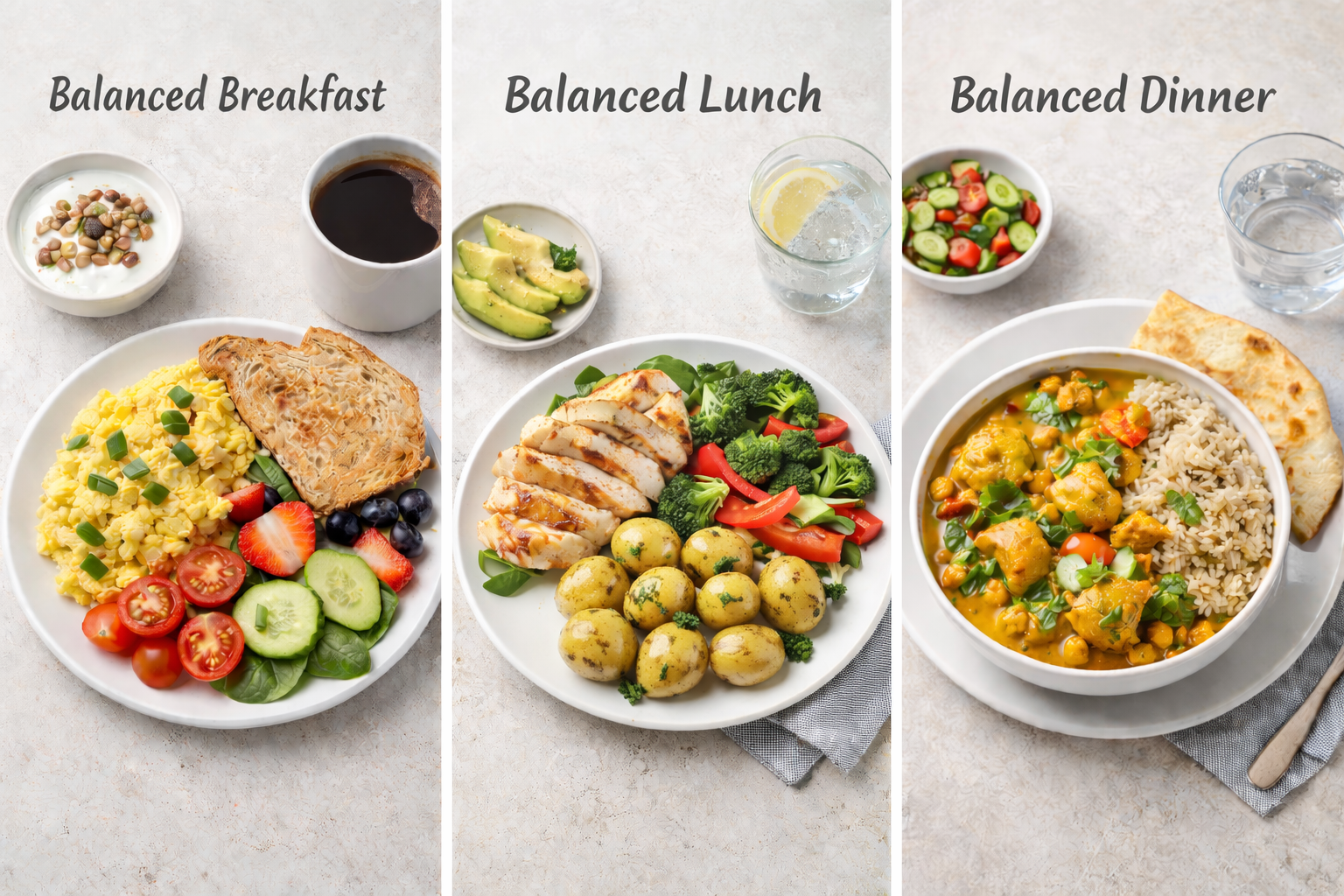
STEP 1- DAILY REGULATE MEALS
You aim to eat three Regulate meals per day.
This provides predictable nourishment, stabilises blood sugar, and reduces nervous system stress.
Each regulate meal (plate) is built from four simple blocks.
This means you are not guessing what to eat — you are assembling a regulated plate.
* Please note with portion guides- the plate guide shows balance.
The hand guide shows practical portion size.
Both tools point to the same outcome:
balanced meals that support blood sugar, hormones, and appetite regulation — without weighing or tracking.
WHAT A REGULATE PLATE LOOKS LIKE-
Breakfast example:
Protein + energy portion + vegetables/fruit + optional nourish fat
Lunch example:
Protein + energy portion + half-plate vegetables + nourish fat
Dinner example:
Protein + energy portion + half-plate vegetables + nourish fat
You are building regulated meals — not perfect meals.
Gentle reassurance- If you miss a block or a meal, you don’t “fail.”
You return to structure at the next meal.
Regulation is built through repetition, not perfection.
YOUR 4 BLOCKS-
An Important Note About Comfortable Fullness
Many diet plans focus on rules.
How much you can eat.
What you can eat.
Or what you’re allowed to have.
For women who have spent years dieting, restricting, overeating, or starting over, this can sometimes disconnect us from the signals our body is trying to give us.
The goal of this pathway is different.
The goal is not to override your body.
The goal is to rebuild trust with it.
These foods are included because they provide nourishment, volume, fibre, nutrients, and support for the biological influences within the Weight Response System™.
But they are not intended to be eaten mindlessly or automatically.
Instead, they provide an opportunity to begin reconnecting with hunger, fullness, and satisfaction.
Why Hunger And Fullness Cues Can Feel Unreliable
If you’ve spent years dieting, restricting, overeating, or moving between periods of control and loss of control around food, your body has learned to adapt.
Over time, this can contribute to:
• Blunted hunger signals
• Stronger cravings
• Feeling suddenly very hungry
• Difficulty recognising fullness
• Automatic eating behaviours
• A sense of urgency around food
This is not a lack of willpower.
It’s a normal response to periods of stress, inconsistency, restriction, and unpredictability around food.
When food has felt scarce, the body learns to protect itself.
When food has become emotionally loaded, the body learns to seek comfort.
And when eating has become automatic, awareness can gradually become disconnected from the process.
This is one of the reasons awareness plays such an important role within the Lose For Life Framework™.
Rebuilding Trust With Your Body
Reconnecting with your body is a skill.
It returns through consistency, safety, awareness, and practice.
Not through control.
Here are some ways to begin strengthening that connection:
1. Eat Regular, Structured Meals
Predictable nourishment helps teach your body that food is available and safe.
2. Slow Down Slightly When Eating
You do not need to eat perfectly mindfully.
Simply creating a little more space during meals can help you notice how your body feels.
3. Check In Mid-Meal
Pause briefly and ask:
“Am I still physically hungry?”
“Am I beginning to feel satisfied?”
There is no right or wrong answer.
The goal is awareness.
4. Practise Stopping At Comfortable Fullness
Not stuffed.
Not overly full.
Simply comfortably satisfied.
This may feel unfamiliar at first.
That’s okay.
You are rebuilding a skill, not passing a test.
5. Remove Judgement
There will be meals where you eat beyond comfort.
That doesn’t undo your progress.
Awareness is still progress.
You simply return to your next structured meal and continue.
What Comfortable Fullness Means
Comfortable fullness is not a rule.
It’s a guide.
A gentle invitation to begin listening to your body again.
The goal is not perfection.
The goal is awareness.
Over time, this helps strengthen trust.
Supports appetite regulation.
Reduces automatic eating.
And helps rebuild a more connected relationship with food.
Because lasting weight regulation is not created through restriction.
It’s created through awareness, consistency, and trust.
Eat until comfortably satisfied. Not because a rule tells you to stop, but because your body is beginning to tell you it has had enough.
STEP 2- SNACKS (IF NEEDED)
Snacks are optional.
They are used to support blood sugar stability and prevent reactive eating between regulate meals.
If you are not hungry, you do not need to snack.
If you are hungry, a regulating snack can help you stay steady until your next meal.
How to Choose a Regulating Snack-
A regulating snack includes:
• 1 Foundation (Protein)
• 1 Gentle Energy or Fibre
• Optional Daily Nourish (if needed for satiety)
This combination supports steady energy and reduces hunger swings.
Simple Snack Combinations (Examples)-
Protein-forward:
• Greek yoghurt
• Cottage cheese
• Eggs
Protein + fruit:
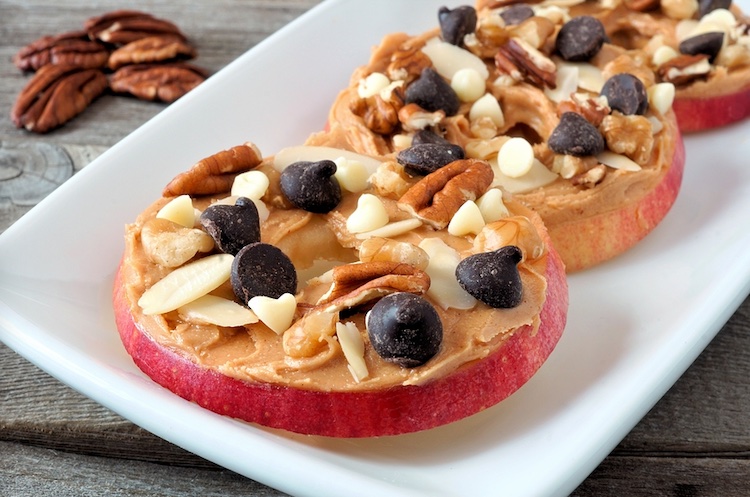
• Apple with nut butter
• Berries with yoghurt
• Banana with a small handful of nuts
Savoury options:
• Hummus with vegetable sticks
• Cheese with cucumber or oatcakes
• Leftover protein from a main meal
Snacks are small by design.
They support you until your next regulate meal.
Portion Guidance (No Weighing)
Use simple hand guides:
• Protein: ½–1 palm
• Fruit / fibre: 1 cupped hand
• Fats (if included): 1 thumb
You are not building a full meal.
You are bridging to your next meal.
Emotional Safety Check-In
Before snacking, pause and ask:
Am I physically hungry — or emotionally activated?
If emotional:
Use your regulation tools first.
Then eat if you still need to.
This builds awareness without removing choice.
Gentle Boundaries
Snacks support regulation.
They are not used to graze continuously.
If you find yourself needing frequent snacks, this is feedback — not failure.
It may mean your main meals need more protein, energy, or nourishment.

STEP 3- LIBERATION FOODS (FREEDOM WITH STRUCTURE)
Liberation foods are the foods you enjoy that sit outside your everyday foundation structure.
They are included to support social life, enjoyment, and long-term consistency — without triggering binge–restrict cycles.
Nothing is banned.
Nothing requires “starting again.”
You return to your structure at the next meal.
Choose Your Liberation Style-
You can choose one of the following styles based on what supports you best:
Option A — Small Daily Liberation
A small portion of a liberation food most days.
Examples:
• A small chocolate bar
• A biscuit with a hot drink
• A small glass of wine
• A small dessert portion
This suits people who prefer gentle daily flexibility and find that small amounts prevent feelings of deprivation.
Option B — One Planned Weekly Liberation-
One larger, planned liberation choice in the week.
Examples:
• One takeaway or restaurant meal
• One dessert out
• Up to 2 standard alcoholic drinks on one occasion
• A social meal with foods outside your foundation structure
This suits people who prefer structure most days and enjoy one intentional social or treat moment.
ALCOHOL- AN INFORMED CHOICE, NOT A BAN.
Alcohol is included in liberation choices, but it interacts differently with the body than food, so it is important to understand how it interacts with your body and your goals.
Alcohol temporarily slows fat burning because your body prioritises processing alcohol first.
It can also increase appetite, lower inhibition around food, and impact sleep and mood.
This doesn’t make alcohol “bad.”
It just makes it something to choose intentionally.
If alcohol has been a coping tool for you in the past, you’re not doing anything wrong.
This plan simply invites you to notice that pattern with compassion.
Guidance:
• If you drink regularly, progress may be slower
• If you drink occasionally and intentionally, progress continues
• Notice how alcohol affects your mood, sleep, and food choices
• Choose amounts that allow you to return to your next meal feeling steady
As with food, alcohol is best enjoyed for social connection — not used for emotional regulation or distraction.-
Clear Boundaries for liberation-
Liberation is planned and portioned — not open-ended.
Guidelines:
• Liberation complements your regulated meals — it doesn’t replace the week of structure
• One planned event is different from a full day of grazing
• Two drinks is different from drinking through emotional activation
• Choose portions that allow you to return to your next meal feeling steady, not depleted
* Choose one style at a time and stick with it for a few weeks before switching.
If liberation foods tend to trigger loss of control for you, use your regulation tools first, then choose intentionally.
Emotional Safety Reminder-
Liberation is not about “being good” or “being bad.”
It is about including enjoyment without creating rebound patterns.
You are practising flexibility within safety.
“Liberation supports life. Structure supports change. You need both.”
A Final Word Before You Begin-
You do not need to follow this plan perfectly for it to work.
You simply need to return to structure more often than not.
This system is designed to support your body, not fight it.
There will be days that feel easy and days that feel harder.
Both are part of regulation, not signs of failure.
If you miss a meal, overeat, snack emotionally, or choose more liberation than planned — you haven’t “ruined” anything.
You pause.
You regulate.
You return to your next regulated meal.
Change is built through repetition, not perfection.
Safety creates consistency.
Consistency creates results.
You are allowed to learn your way forward, and you don’t need to believe in yourself yet.
You just need to follow the structure until your body starts to feel safer.